
Why Fear and Greed Drive Crypto Markets - The Psychology Explained
You think you’re trading Bitcoin. But in truth, you’re trading your emotions.
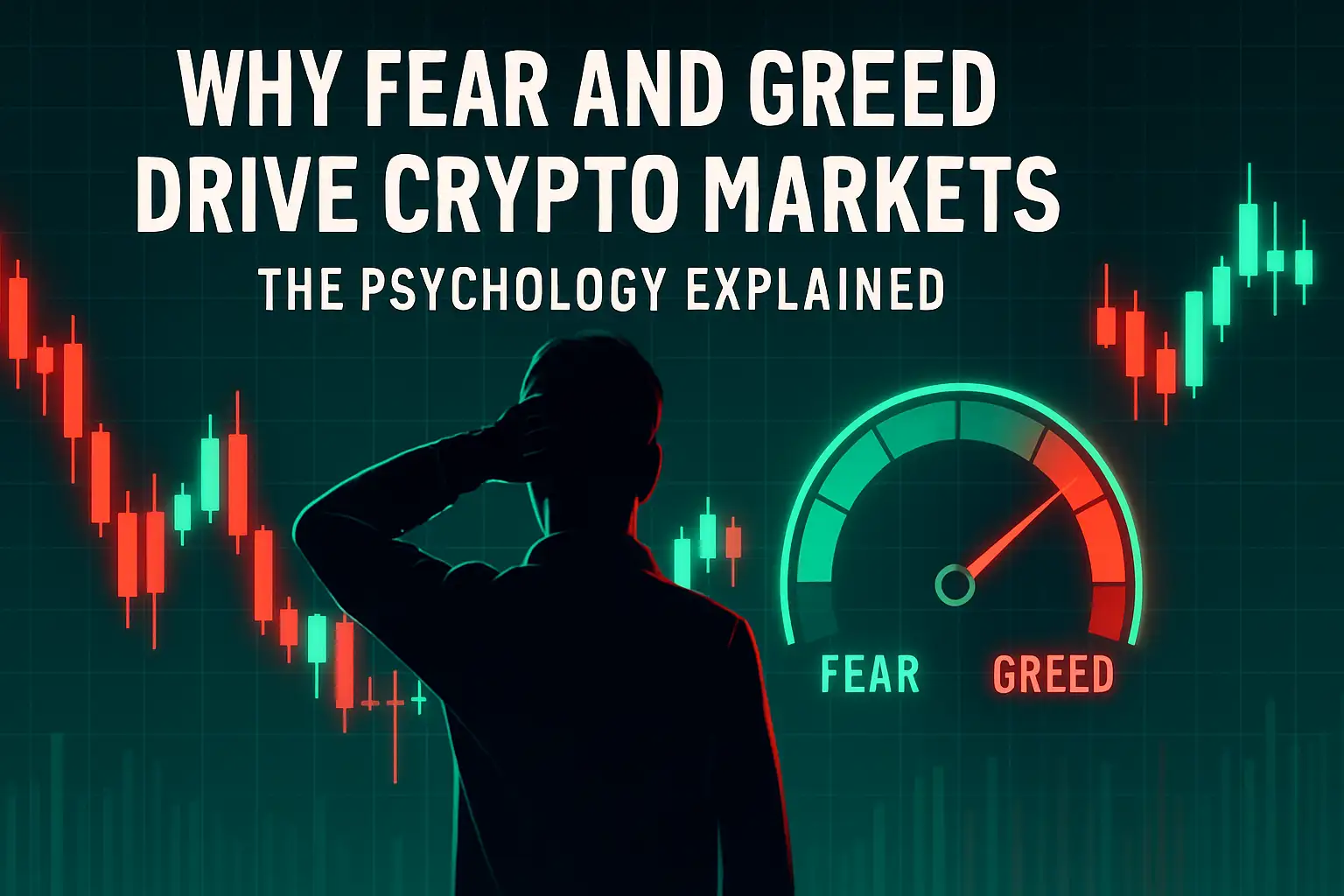
Every candle on the chart, every headline on Twitter, every rumor whispered in Telegram isn’t just information. It’s fuel for your nervous system. Fear and greed are the invisible hands moving the crypto market.
But here’s the hidden twist: what you call “greed” is often fear in disguise. And what you call “fear” is often the doorway to growth.
This isn’t just about making money. It’s about finally understanding why fear and greed drive crypto markets and why they’ve been driving you, too.
Fear and Greed: The Ancient Drivers of Every Market
Crypto isn’t rational. Neither are you. Markets move not because of math, but because of biology.
- Fear pushes you to panic sell, to freeze, to give up too soon.
- Greed pulls you into FOMO, over-leverage, and chasing pumps.
- 24/7 trading means your brain never rests.
- No central regulation means raw emotions spill out unfiltered.
“Markets are driven by fear and greed, but crypto is their purest form.”
Fear: Stronger Than You Ever Expected
Fear is not just an emotion. It’s survival.
How Fear Shows Up in Crypto
- FUD (Fear, Uncertainty, Doubt): one negative headline can erase months of conviction.
- Loss aversion: psychology shows losses hurt 2× more than gains feel good.
- Paralysis: when prices are lowest, you freeze, whispering: “What if it drops more?”
Greed: Fear Wearing a Mask
Greed feels like fire. But underneath, it’s fear - fear of missing out, fear of being left behind.
When you buy a coin at the top, you’re not really greedy. You’re terrified. Terrified that your friends will win while you watch.
- FOMO isn’t desire. It’s insecurity disguised as ambition.
- Leverage isn’t confidence. It’s desperation for more than you believe you deserve.
“Greed in crypto is rarely about money. It’s about belonging.”
And that’s why greed is so dangerous. It looks like power, but it’s actually panic.
The Fear & Greed Index: A Mirror You Can’t Ignore
Crypto even has a dashboard for emotions: the Fear & Greed Index.
- 0–24 (Extreme Fear): the market is frozen. Historically, these were buying opportunities.
- 75–100 (Extreme Greed): euphoria reigns. Historically, market tops.
But here’s the real secret: the index is not about “them.” It’s about you.
When you see “extreme fear,” do you freeze... or do you step forward?
The Herd and the Mind Traps
Why do so many lose, even when they “know better”? Because psychology repeats itself.
- Herd behavior: following the crowd feels safer than standing alone.
- Recency bias: yesterday’s pump convinces you tomorrow will pump, too.
- Confirmation bias: you only seek voices that agree with your hope.
The result?
👉 Buying high. Selling low. Every. Single. Cycle.
This isn’t stupidity. It’s biology. The brain evolved to survive in tribes, not in candlestick charts.
The Emotional Market Cycle
Crypto doesn’t just have “bull” and “bear.” It has emotional seasons.
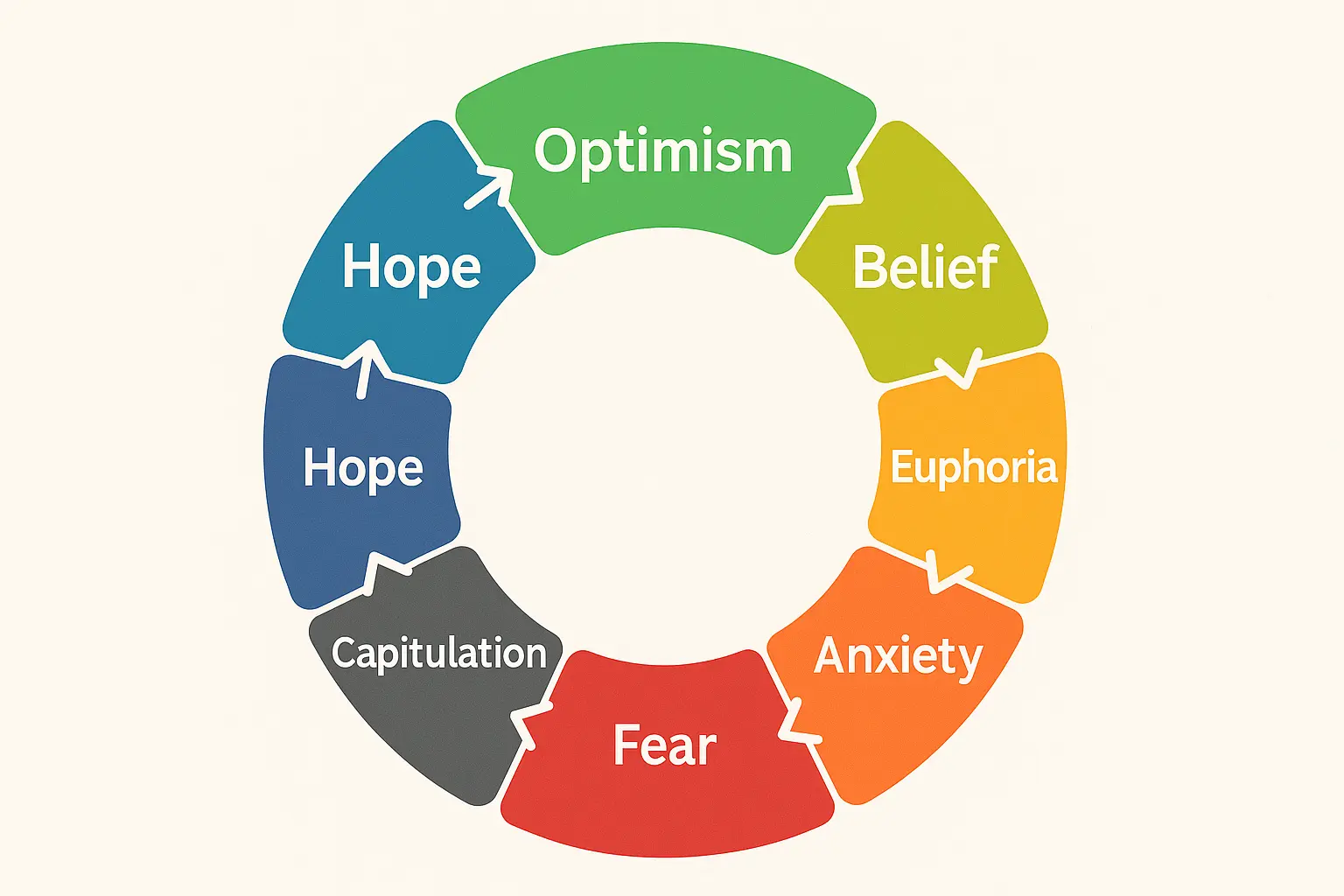
Sound familiar?
If you’ve ever bought during euphoria and sold during capitulation... you’ve lived the cycle.
The Hidden Cost of Fear and Greed
Fear and greed don’t just cost money. They cost years of your life.
- Fear makes you sell your future too early.
- Greed makes you mortgage your present for dreams.
- Together, they rob you not just of dollars, but of peace.
Why Fear and Greed Drive Crypto Markets (Deeper Layer)
Here’s the insight most ignore: fear and greed are not opposites. They are twins.
- Fear says: “I’ll lose.”
- Greed says: “I’ll miss out.”
- Both say: “I’m not enough.”
This is why crypto feels so personal. When you lose money, you don’t just lose numbers, you feel like you’ve lost part of your worth.
“Until you make the unconscious conscious, it will direct your life and you will call it fate.” - Jung
Crypto is the stage. Fear and greed are the actors. You are the scriptwriter... or the victim.
How to Escape the Crypto Mind Trap
You can’t remove fear and greed. But you can use them.
- Name them. Say: “I feel fear,” not “the market is bad.”
- Write a plan. Define entry, exit, and risk before opening the app.
- Automate. Use DCA, stop-loss, and limit orders... take emotion out of execution.
- Detach. Unfollow hype accounts. Step away when Twitter screams “moon.”
- Ground yourself. Breathe. Touch grass. Remember: your identity is bigger than your wallet.
✨ The goal is not to kill emotions. The goal is to trade with awareness, not reaction.
Case Study: Bitcoin at $60,000
Imagine this:
- You bought Bitcoin at $60k, because everyone said $100k was next.
- Months later, it’s $20k. You panic sell.
- A year later, it’s back at $50k.
Was the problem Bitcoin? No. It was your inner cycle of fear and greed.
Crypto punishes impatience. It rewards those who can sit through storms.
Beyond Money: The Real Lesson
Fear and greed in crypto aren’t just trading signals. They are mirrors.
- Fear shows you where you don’t trust yourself.
- Greed shows you where you feel incomplete.
Once you see that, crypto becomes more than a market. It becomes a teacher.
The Market Is You
So, why fear and greed drive crypto markets? Because they drive humans.
Crypto won’t change... it will always be volatile, wild, emotional. But you can. If you learn to see fear and greed not as enemies but as guides, you stop being the victim.
In markets, as in life, the patient are rewarded, the impulsive are punished.
Explore more Articles
If this article made you pause, imagine what you’ll discover about yourself in our other guides:
- Personality Archetype Quiz – find the hidden roles you play in life.
- Hidden Relationship Needs – discover what your heart really seeks.
- Will I Be Rich? – a playful dive into money psychology.
And then come back and tell me – what did you discover?
– Mia P, 2025.